
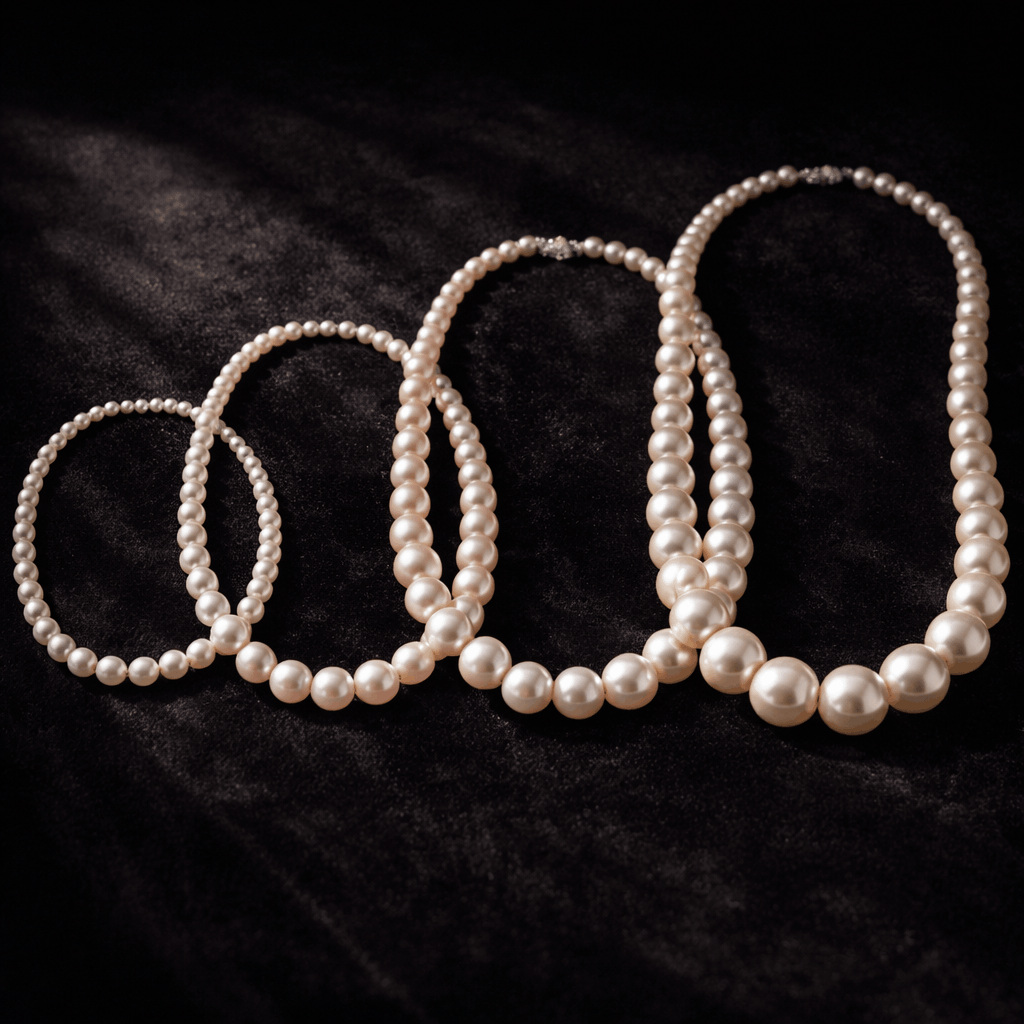
My friend texted me a photo last week of some pearls her aunt gave her. “Are these worth anything?” Honestly, I get this question constantly. People inherit pearls, find them at estate sales, or just wonder if what they’re looking at is actually valuable. Here’s the reality – figuring out how much are real pearls worth isn’t as simple as checking a price tag. So many factors play into pearl value. The type matters hugely. Size changes everything. Luster can make or break the price. Where they came from affects cost big time.
What really frustrates people is that two pearl necklaces sitting next to each other can have wildly different values. One might be worth a few hundred bucks. The other? Thousands. And to someone who doesn’t know pearls, they look basically the same. In this guide, I’m breaking down exactly what makes real pearls valuable and giving you actual price ranges so you know what to expect when shopping or valuing pearls you already own.
What Determines How Much Real Pearls Are Worth
Pearl value comes down to several key factors working together. First up is pearl type – saltwater versus freshwater makes a massive difference in pricing. Then you’ve got size measured in millimeters. Bigger generally means more expensive. Surface quality matters too. Fewer blemishes means higher value. Luster is probably the biggest factor though. That glow, that shine – it separates cheap pearls from valuable ones instantly.

Shape plays into pricing as well. Perfectly round pearls cost way more than baroque or irregularly shaped ones. Color affects value depending on rarity and demand. Then there’s origin – where the pearl actually came from. Japanese Akoya pearls command different prices than Chinese freshwater. All these factors combine to determine how much are real pearls worth in today’s market. You can’t just look at one thing and know the value.
Real Freshwater Pearl Worth and Price Ranges
Freshwater pearls are where most people start because they won’t destroy your budget. You can snag a decent quality freshwater pearl strand for anywhere from $50 to $300. Size and quality make the difference there. Most of these come from China. They’re real pearls that look beautiful without requiring you to drop thousands. Perfect if you want everyday pearls or you’re just getting into wearing them.

Now if you want nicer freshwater – the kind with really good shine and barely any spots – you’re looking at $500 to maybe $1,000. Get into the premium stuff? Larger sizes like 10-11mm with surfaces that are almost perfect? Those can push past $1,500 easily. But honestly, most people land somewhere in that $100-400 sweet spot. Still real pearls. Still gorgeous. Just way more accessible when people ask how much are real pearls worth for daily wear.
How Much Are Real Akoya Pearls Worth
Akoya pearls jump up in price compared to freshwater. Big jump actually. These are your classic saltwater pearls from Japan with that crazy shine everyone talks about. A quality Japanese Akoya pearl necklace starts around $300-500 if you’re looking at smaller ones (6-7mm). Mid-sized Akoya in the 7-8mm range? You’re talking $800 to $2,000 depending on how good the luster and surface are.

Go bigger with Akoya – like 8.5-9mm – and you’re easily hitting $3,000 to $6,000 per strand if the luster is top-tier and surfaces are nearly perfect. Then there’s Hanadama-grade Akoya. These are the insane ones. $5,000 to $10,000, sometimes more. The shine on these pearls is wild – like looking in a mirror. You just don’t see that level of luster in other types. When considering how much are real pearls worth for something special – heirloom quality, big occasions – Akoya hits this perfect balance between achievable and absolutely stunning for most people’s budgets.
Real Tahitian Pearl Worth and Pricing
Tahitian pearls are a whole different vibe. Naturally dark – blacks, grays, these gorgeous peacock greens. Really unique looking. They come from French Polynesia and cost more because they’re rare and those colors are just stunning. A quality Tahitian pearl strand in 9-10mm starts around $1,500 to $3,000 for decent ones.

Want better quality Tahitians? The ones with excellent shine and vibrant peacock or silver colors running through them cost $4,000 to $8,000. Get exceptional strands – we’re talking large sizes like 11-13mm, perfectly round, incredible luster – and those easily blow past $10,000 to $15,000. Even single high-quality Tahitian pearls for pendants or earrings run $200 to $800 each. Size and quality matter there too. Those exotic colors combined with limited supply mean Tahitian values stay consistently high when evaluating how much are real pearls worth in the luxury range.
How Much Are Real South Sea Pearls Worth
South Sea pearls are the big ones. Literally. These are the largest cultured pearls, typically 10-15mm or bigger. They come from Australia, Indonesia, and the Philippines. White South Sea pearls with silver overtones start around $3,000 for a decent quality strand in smaller South Sea sizes (10-11mm).

Premium white South Sea strands in 12-14mm with excellent luster run $8,000 to $20,000. Golden South Sea pearls? Even more expensive because they’re rarer. A quality golden South Sea strand easily costs $10,000 to $25,000 or more. Top-tier specimens with exceptional size, luster, and perfect rounds can exceed $50,000. Yeah, seriously. When people ask how much are real pearls worth at the absolute top end, South Sea is where you see those insane valuations that make pearls genuine investment pieces.
How Pearl Jewelry Type Affects Worth
How pearls are used in jewelry dramatically impacts total value. A single pearl pendant obviously costs less than a full strand necklace using similar quality pearls. You’re paying for one pearl versus fifty or more. Pendants with quality pearls might run $150 to $2,000 depending on pearl type and size.

Pearl earrings use two matched pearls. Matching matters hugely for value – finding two identical pearls is harder than you’d think. Quality pearl studs range from $100 for freshwater to $5,000+ for large South Sea pairs. Pearl bracelets fall somewhere between earrings and necklaces in pearl count, typically $200 to $3,000. Full strand necklaces use the most pearls, explaining why they cost more. Understanding how much are real pearls worth means considering not just the pearls themselves but how many you’re actually buying.
Vintage and Antique Real Pearl Worth
Older pearls can be worth more or less than modern ones depending on condition and provenance. Vintage pearls from the early 1900s might have incredible luster if well-maintained. However, pearls can deteriorate over time if stored improperly. They dry out, crack, lose luster. So age alone doesn’t guarantee value unfortunately.
That said, pearls with documented history or famous previous owners can command premium prices at auction. Estate pearls from quality makers like Mikimoto or Tiffany hold value better than unmarked strands. Antique natural pearls (pre-1920s before culturing became common) are extremely rare and valuable – potentially worth tens of thousands. When evaluating how much are real pearls worth from an inheritance or estate sale, getting a professional appraisal is crucial. The history and brand matter as much as the pearls themselves sometimes.
How Pearl Size Impacts Real Pearl Worth
Size makes a massive difference in pearl pricing. We’re talking exponential price increases, not linear. A 7mm Akoya pearl might cost $50. An 8mm Akoya of similar quality could be $100. A 9mm? Potentially $200 or more per pearl. The jump from 8mm to 9mm is way bigger than 7mm to 8mm because larger pearls are exponentially rarer.
This applies across all pearl types. South Sea pearls show this dramatically – a 10mm might be $300, but a 15mm could be $2,000. Five millimeters doesn’t sound like much, but it represents years of additional growth and much lower harvest numbers. Bigger pearls also show luster and color better, adding to their appeal. When wondering how much are real pearls worth, always check the size first. That single measurement tells you a ton about baseline value before considering other quality factors.
How Luster Quality Affects Real Pearl Worth
Luster is everything with pearls honestly. It’s that glow, that mirror-like reflection you see on quality pearls. Poor luster pearls look dull and chalky. They might technically be real pearls, but they’re not worth much. Maybe $50 for a whole strand of low-luster freshwater. Nobody wants them because they just don’t look good.

Excellent luster changes everything. The same sized pearls with incredible luster could be worth ten times more than dull ones. High-luster Hanadama pearls command premium prices specifically because of their exceptional shine. When jewelers evaluate how much are real pearls worth, they look at luster before almost anything else. A smaller pearl with amazing luster beats a bigger pearl with mediocre shine every time in terms of actual beauty and wearability.
Surface Quality Effects on How Much Pearls Are Worth
Surface blemishes directly impact how much pearls are worth. Clean surfaces with minimal spots, bumps, or irregularities cost significantly more than heavily blemished pearls. Perfectly clean pearls are super rare though. Most have at least minor blemishes if you look closely. That’s actually normal and okay for mid-range pearls.
What matters is whether blemishes are visible from normal viewing distance. Tiny surface marks you can only see up close? Not a huge price hit. Obvious bumps, deep grooves, or extensive spotting visible from across the room? Those pearls sell for way less. Premium pearls have surfaces you’d call “near-flawless” – maybe one or two tiny marks maximum. When considering how much are real pearls worth, factor in surface quality as a major price component. The difference between clean and heavily blemished can be thousands of dollars on the same strand.
Getting Real Pearls Professionally Appraised for Worth
If you’ve inherited pearls or bought vintage pieces, getting a professional appraisal makes sense. Appraisers can identify pearl type, evaluate quality factors, and give you accurate current market values. This matters for insurance purposes too. You want documentation if your pearl necklace is worth several thousand dollars.

Look for appraisers certified by gemological institutes who specialize in pearls specifically. Some jewelers offer free basic evaluations, but detailed written appraisals typically cost $50-150. Worth it though if you’re dealing with potentially valuable pearls. The appraisal tells you exactly how much are real pearls worth in your specific situation, accounting for all the quality factors and current market conditions. Then you can make informed decisions about insurance, selling, or just knowing what you own.
Where to Buy Real Pearls for Best Value
Buying directly from pearl specialists usually gives you better value than department stores. Specialist retailers like PearlsOnly focus exclusively on pearls. They understand quality, have better selection, and often offer competitive pricing. You’re paying for the pearls themselves, not retail markup to support huge overhead costs at fancy mall locations.
Estate sales and auctions can offer deals on quality pearls, but you need to know what you’re looking at. Bring someone knowledgeable or risk overpaying for low-quality pieces. Online retailers work great if they offer detailed specs, quality photos, and return policies. Being able to see exact luster grade, surface quality rating, and measurements helps you understand what you’re actually getting. When shopping and wondering how much are real pearls worth for your budget, compare similar quality levels across multiple sellers. Prices vary, but you’ll quickly develop a sense of fair market value for the quality you want.
