
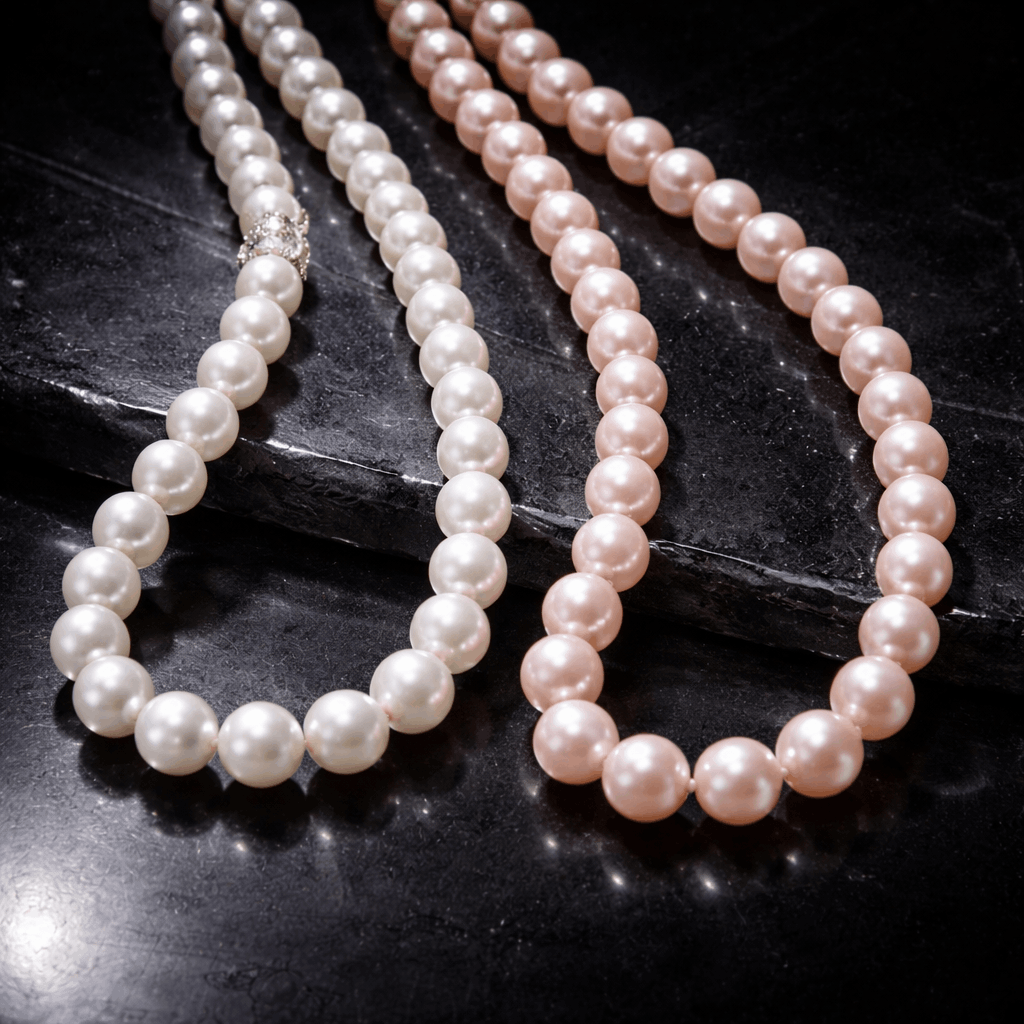
So you’ve decided you want pearls. Great choice honestly. But then you start browsing and suddenly you’re stuck staring at two very different options — akoya pearls vs freshwater pearls — and the decision feels way harder than it should. I remember the exact moment this happened to me. I was shopping for a gift for my sister’s birthday and spent a full hour going back and forth between a classic white Akoya strand and a gorgeous freshwater set at nearly half the price. Same white color. Totally different feel. I had no idea which one was actually better for her. Sound familiar? That confusion is exactly what this guide is here to fix. By the end you’ll know precisely which pearl type fits your needs and why.
Here’s the thing — both pearl types are beautiful. Both are real genuine cultured pearls. But they are genuinely different in ways that matter depending on what you’re looking for. Shape luster size price durability. Each category tells its own story. So let’s go through them one by one and make this decision simple.
Akoya Pearls vs Freshwater Pearls: The Basic Difference
Start with the fundamentals. Akoya pearls are saltwater pearls — grown inside Pinctada fucata oysters primarily farmed in Japan. Freshwater pearls on the other hand come from mussels farmed mostly in China’s lakes and rivers. That difference in origin actually matters a lot because it shapes everything from the pearl’s shape to its nacre thickness to its final price tag.

Akoya pearls are bead-nucleated meaning a round bead nucleus is inserted into the oyster and the pearl nacre grows around it. That nucleus is what gives Akoyas their famously perfect round shape. Freshwater pearls are tissue-nucleated with no hard bead inside meaning the nacre grows more freely — which explains why their shapes vary so much more. So right from the start akoya pearls vs freshwater pearls is really a comparison between precision and natural variety.
Shape: Where Akoya Pearls Win Clearly
If perfectly round pearls matter to you then Akoya pearls are your answer full stop. They’re famous in the pearl world as “8-way rollers” — meaning they roll smoothly and evenly in any direction on a flat surface. That kind of geometric perfection is genuinely rare in nature and it’s one of the biggest reasons Akoyas command higher prices. Every single pearl in a matched strand will be identically round. It’s almost unnatural how consistent they look.

Freshwater pearls tell a much more varied story. You’ll find near-rounds, off-rounds, drops, buttons and free-form baroques all within the freshwater family. The most common shape sold in stores today is off-round — slightly oval rather than perfectly spherical. To a casual eye it looks round enough. But side by side with an Akoya the difference is obvious. Now the good news: top-grade AAA freshwater pearls and bead-nucleated Edison pearls do achieve near-perfect rounds. So if you want freshwater pearls with genuine roundness just make sure you’re buying the right grade.
Luster: The Most Important Factor in Akoya Pearls vs Freshwater Pearls
Luster is everything. A pearl with poor luster is just a pretty bead. And this is where the akoya pearls vs freshwater pearls comparison gets really interesting. Akoya pearls have a legendary “mirror-like” or “ball-bearing” shine — sharp bright reflections where you can literally see your own face looking back at you. The edges of reflected light on an Akoya surface are crisp and defined. No softness. No blur. Just this incredibly glossy almost lacquered glow that photographs beautifully and catches every eye in the room.

Freshwater pearls traditionally have softer more satiny luster — warmer and more diffused rather than sharp and glossy. Lower grades like AA show this most noticeably with light reflecting in a gentle glow rather than a hard shine. But here’s where things get exciting. High-grade metallic freshwater pearls and Gem Grade rounds have closed the gap dramatically in recent years. Their luster can rival Akoyas in the best examples. So if luster is your top priority and budget is flexible go Akoya every time. But don’t write off premium freshwater — at the right grade it’s stunning.
Nacre Quality and Durability
This one surprises a lot of people. Freshwater pearls are actually solid nacre all the way through because there’s no bead nucleus inside. That means they’re incredibly durable — you can wear them daily without worrying much about nacre chipping or peeling. For everyday jewelry or first pearls for a young person freshwater’s durability is a genuine advantage.

Akoya pearls have a bead nucleus with a nacre coating on the outside. The nacre layer on quality Akoyas is substantial and built to last — but it does mean the pearl isn’t solid nacre through and through. With proper care Akoya pearls last generations easily. But they do need a little more attention especially around chlorine perfume and heat. So for a piece you want to wear every single day without thinking about it freshwater actually has a quiet durability advantage worth knowing.
Size Ranges: What to Expect
Both pearl types live mostly in the smaller to mid-size ranges which makes them versatile for necklaces bracelets and earrings. Akoya pearls typically range from 2mm up to about 9.5mm with anything above 9mm being genuinely rare and expensive. The sweet spot for most Akoya jewelry sits in the 7.0-8.5mm range — classic elegant wearable every day.

Freshwater pearls cover a similar range but stretch further on the upper end. Thanks to advances in culturing techniques and bead-nucleated Edison pearls freshwater sizes can now reach 15mm and beyond. So if you want larger statement pearls without paying South Sea prices freshwater is honestly your best option right now. The 7.5-10mm range is most popular for freshwater necklaces and sets and offers excellent visual impact at accessible price points.
Akoya Pearls vs Freshwater Pearls: Price Comparison
Let’s talk numbers because this is often what makes the decision. Akoya pearls are the more expensive of the two — driven by rarity, Japan’s higher production costs and the pearl’s global reputation as a luxury product. A quality Akoya necklace typically starts around $350 and can reach $10,000 and beyond for larger sizes and top grades like Hanadama certified pearls. Earrings start around $99 and sets from roughly $689 upward.

Freshwater pearls offer serious value. A beautiful freshwater necklace starts around $265 and even top-grade metallic or Gem Grade strands rarely exceed $3,700. Earrings start as low as $75 and sets from around $515. So in the akoya pearls vs freshwater pearls price comparison you’re typically spending roughly half to two-thirds less for freshwater at comparable grades. That’s not a small difference. For budget-conscious buyers or anyone shopping for a first pearl piece freshwater gives you genuinely beautiful jewelry without the premium price tag.
Colors Available in Each Pearl Type
Color options differ meaningfully between the two types. Akoya pearls come naturally in white, silver-blue, blue and occasionally soft gold and pistachio tones. The classic choice is white with rose overtones — that timeless look most people picture when they think “pearl necklace.” Black Akoya pearls exist but are color-treated not natural so keep that in mind when shopping.

Freshwater pearls offer a wider natural color palette. White pink peach and lavender all occur naturally without treatment. That lavender freshwater strand or peachy-pink bracelet you’ve been eyeing? Completely natural color. Edison pearls push this even further with dramatic metallic purples golds and greens that look almost otherworldly. So if color variety matters to you freshwater wins this category easily.
Which Pearl Type Is Right for You
Here’s the honest answer. Choose Akoya pearls if you want heirloom-quality pearls with that iconic mirror luster and perfectly round shape — and you’re happy to invest $400 or more for a piece built to last a lifetime. Classic bridal jewelry, milestone gifts and investment pieces all point toward Akoya. The precision and prestige are genuinely unmatched at this price tier.
Choose freshwater pearls if shape perfection isn’t your top priority, you love natural color variety, you want something durable for daily wear or you’re buying a beautiful first pearl gift on a reasonable budget. Modern high-grade freshwater pearls are a completely different product from what they were ten years ago. They’re soft gorgeous and incredibly wearable. In the akoya pearls vs freshwater pearls debate there’s honestly no wrong answer — just the right answer for you specifically.
