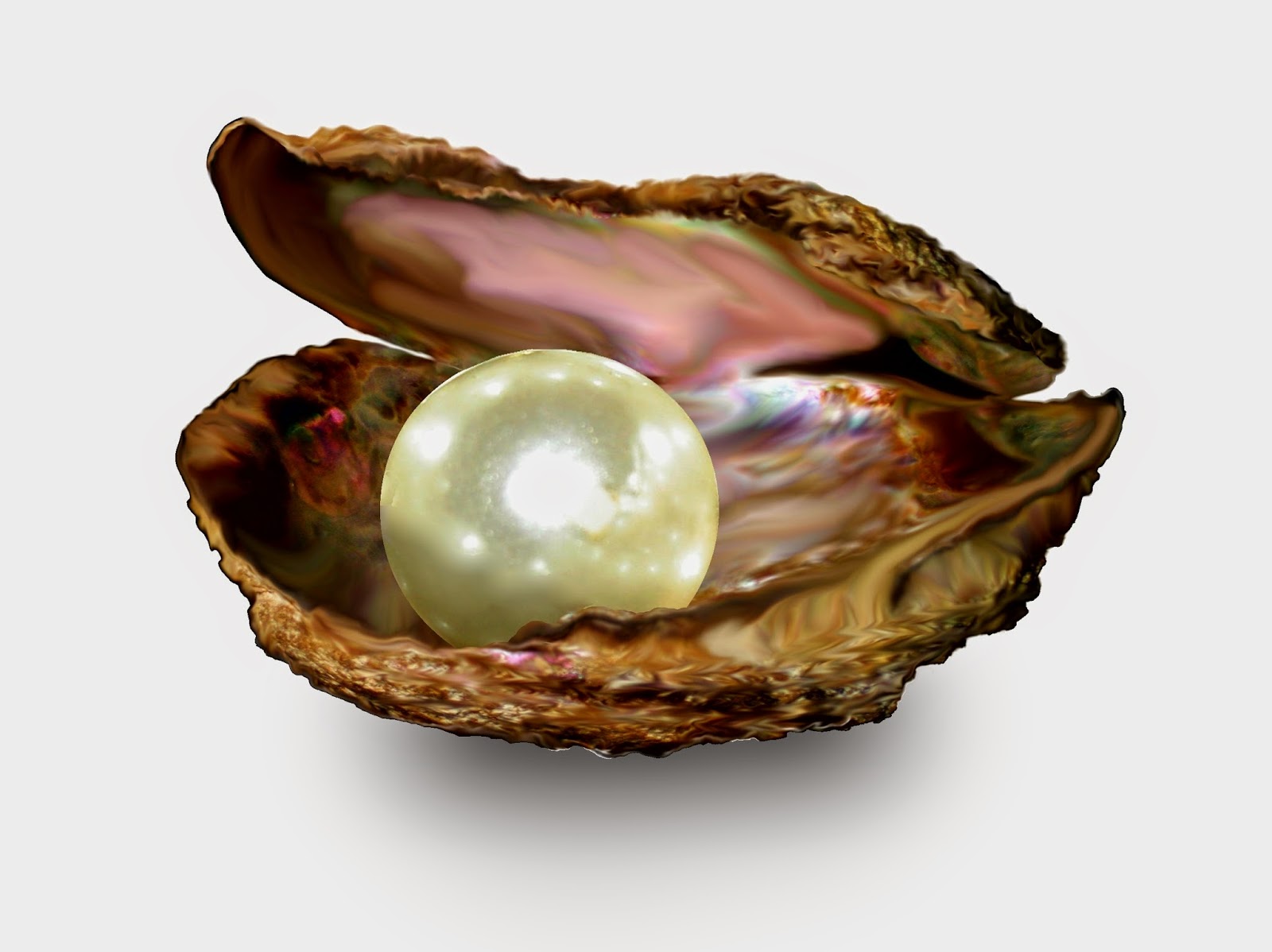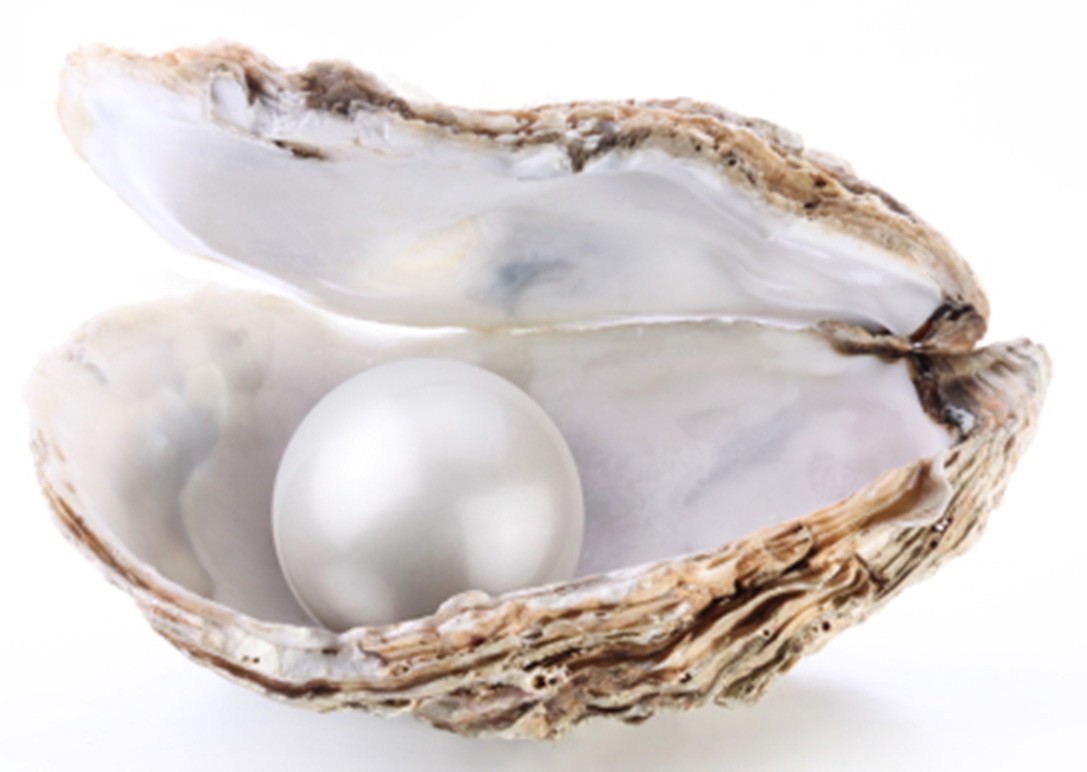
No one can deny that pearls are beautiful and can be used in jewellery to make stunning creations. But how much do we actually know about them? Apparently there are as many as 17 different types of pearls and these fall into three main categories – natural, cultured and imitation.
Natural pearls are very rare these days due to over harvesting in the past. For them to be formed requires a unique set of circumstances. They are formed inside molluscs, moist commonly oysters and mussels. The process begins when an irritant gets inside the shell. This could be something as small as a tiny grain of sand or little stone. In order to protect the surface inside the mollusc a secretion known as nacre is secreted around the irritant. Layer upon layer of this lustrous substance builds up and so the pearl is formed. This rather amazingly can take up to seven or eight years. Although there is variation amongst the species as few as one in every thousand oysters or mussels might contain a pearl. And out of these only a few will be of the right quality and texture. In terms of quantity, around three tons of oysters might only produce 3 or 4 perfect pearls. The most valuable pearls are perfectly symmetrical, relatively large and produced naturally. They shine and shimmer and have an iridescence known as orient lustre. The main oyster beds lie in the Persian Gulf, along the coasts of India and Sri Lanka, and in the Red Sea. Chinese pearls come mainly from freshwater rivers and ponds, whereas Japanese pearls are found near the coast in salt water. Freshwater pearls also occur in the rivers of Scotland, Ireland, France, and Austria. The different locations and types of water where the molluscs are found produce local variations in colour, ranging from white, to those with a hint of colour, often pink, to brown or black. read more