
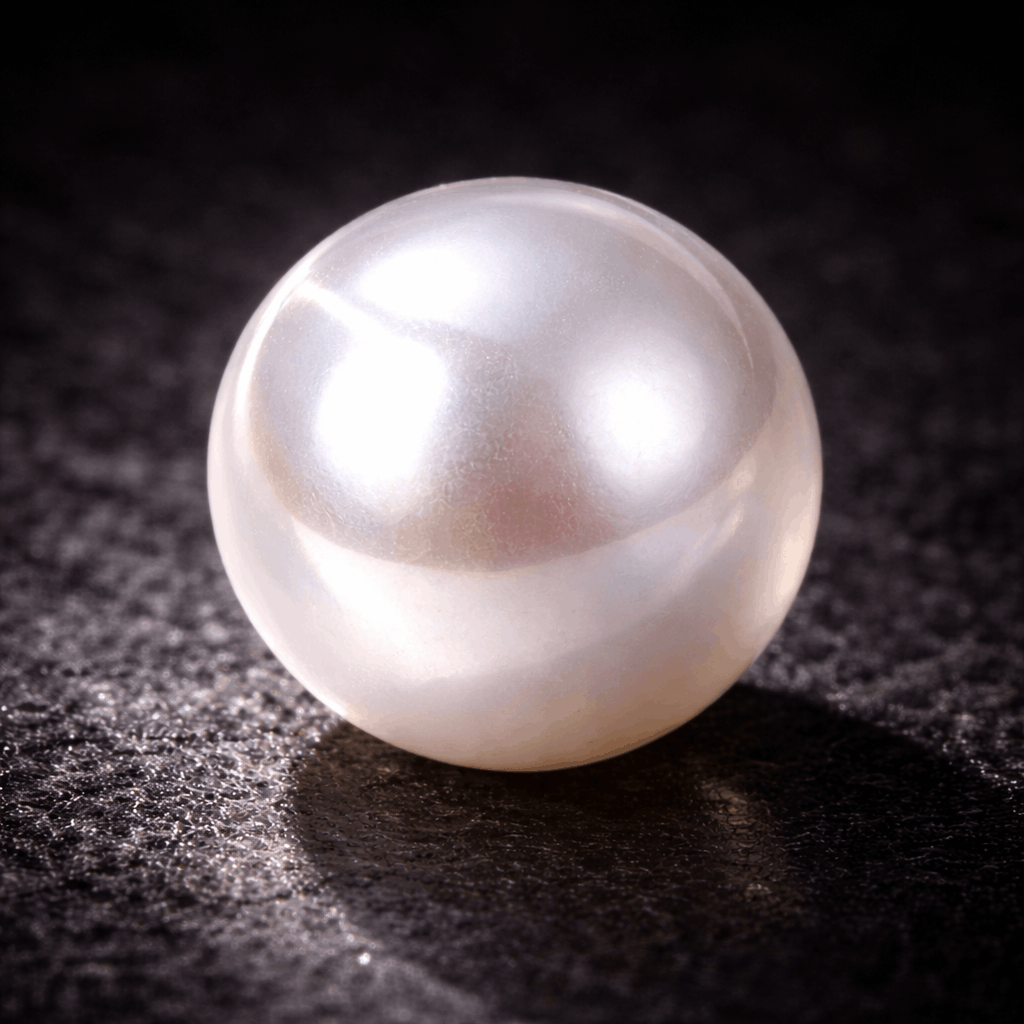
There’s something almost unbelievable about pearls when you really stop to think about it. Every single one starts as a threat — a tiny irritant that slips inside a living mollusk and triggers a biological reaction taking years to complete. No heat. No pressure. No mining equipment. Just a creature quietly doing what nature built it to do. So if you’ve ever wondered how pearls are made the answer is genuinely one of the most fascinating stories in the gemstone world. Let’s walk through the whole thing properly.
Where Pearls Actually Come From
Most people know pearls come from oysters. The full picture though is a bit more interesting than that. Pearls form inside mollusks — a family that includes both saltwater oysters and freshwater mussels — and the process kicks off the same way every time. A foreign irritant gets trapped inside the mollusk’s shell. The creature can’t remove it. So instead it starts coating the irritant in a smooth protective substance called nacre pronounced NAY-kur. Then layer by layer that nacre builds up over months and years until something remarkable takes shape.

Now here’s what most buyers don’t realize. The vast majority of pearls today are cultured not natural. Natural pearls form entirely by accident in the wild without any human involvement — which makes them almost impossibly rare and expensive. Cultured pearls follow the exact same biological process. The only difference is that a skilled farmer introduces the irritant to get things started. After that everything happens completely naturally inside the mollusk. So cultured pearls are genuinely real gems not copies and they represent over 99% of what you’ll find anywhere today.
The Formation Process Step by Step
It starts with a procedure called nucleation. A trained technician — often called a grafter — carefully opens the mollusk and implants either a small round bead nucleus or a tiny piece of donor tissue into the soft mantle inside. That implantation is the trigger. The mollusk senses the foreign object immediately and its defense response begins without hesitation.

Right away nacre secretion starts. The mantle tissue deposits nacre — a combination of calcium carbonate crystals and an organic binding protein called conchiolin — directly onto the nucleus surface. Each individual layer is almost impossibly thin. But those microscopic layers stack in a way that causes light to bounce and refract between them. That’s what creates the signature inner glow pearls are famous for. Not a polish. Not a treatment. Pure physics built into the gem’s structure naturally over years.
And it genuinely does take years. Akoya pearls develop over one to two years. South Sea pearls need two to four years — their oysters build nacre slowly in much thicker layers which is exactly what produces that deep satiny luster. Freshwater pearls vary most widely taking one to six years depending on target size and quality. So every pearl sitting in a jewelry case has spent years growing inside a living creature. That context changes how you look at them honestly.
Natural Pearls vs Cultured Pearls
This distinction trips up a lot of first-time buyers so it’s worth being clear. Natural pearls happen entirely by chance. A wild mollusk encounters a random irritant — a parasite maybe or a shell fragment — and starts producing nacre around it with zero human input. Because this happens so rarely natural pearls are extraordinarily scarce today. As a result most come through antique auctions or inherited collections rather than fresh production and their prices reflect that scarcity completely.

Cultured pearls begin with a deliberate introduction of the irritant but after that moment the mollusk takes over entirely. It secretes nacre at its own pace. Develops its own overtones. Builds its own surface character over time. The result is structurally and chemically identical to a natural pearl. So when you invest in a cultured pearl necklace you’re buying a genuine gemstone — just one whose formation got a deliberate nudge at the very start.
Freshwater vs Saltwater Varieties
Where a mollusk lives shapes the pearl it produces in ways that run deeper than just location. Saltwater pearls grow inside oysters in ocean environments — bays tidal inlets and carefully managed sea farms across Japan French Polynesia and Australia. These oysters typically produce one pearl per nucleation cycle. So their bead-nucleated pearls tend toward rounder shapes and sharper luster as a result. Freshwater pearls on the other hand come from mussels in lakes rivers and ponds — mostly in China. A single mussel can carry multiple pearls at once sometimes thirty or more making freshwater production far more abundant and pricing far more accessible.
There’s also a nacre difference worth knowing. Most saltwater pearls have a round bead nucleus at the center with nacre layered around the outside. Freshwater pearls are typically solid nacre all the way through because tissue nucleation leaves no hard center. Plus that solid structure makes freshwater pearls genuinely tough — great for everyday pieces that take real wear.
The Main Pearl Types and What Makes Each One Different
Akoya pearls are the archetype. The classic round white pearl most people picture when they hear the word pearl at all. Grown primarily in Japan they’re famous for sharp mirror-like luster and consistent round shape. Tahitian pearls are a completely different story — grown in the black-lipped oyster across French Polynesia they develop extraordinary dark colors naturally. Deep greens peacock blues aubergines and silvers with zero treatment or dye. That’s genuinely rare and it’s exactly why Tahitians have such a devoted following globally.

South Sea pearls are the largest and most luxurious of the cultured family. Grown inside the Pinctada maxima oyster in Australian Indonesian and Philippine waters their thick nacre and slow growth produce a rich satiny glow that’s immediately recognizable. Then there are freshwater pearls — the most versatile of the group. Widest range of shapes colors and sizes. Classic white blush pink soft lavender warm peach. All at price points that genuinely open pearl jewelry up to more people.
From Ocean to Jewelry Case
Harvest is a careful process. Farmers open each mollusk individually examine the pearl and extract it using delicate tools designed not to damage the nacre surface. Healthy mollusks often go straight back into the water for another nucleation cycle — sometimes producing two or three pearls across their lifetime. So that ability to reuse the same creature repeatedly is one reason sustainable pearl farming works so naturally as a practice.

After harvest comes the preparation work most buyers never see. First cleaning to remove surface residue. Then sorting and grading by size shape luster color and surface quality under precise lighting. Next matching follows — finding pearls with consistent enough characteristics to build a complete strand can mean sorting through thousands of individual gems. Once matched they’re drilled strung on silk thread and knotted between each pearl individually. Those knots protect nacre from contact and also stop the strand scattering if the thread ever gives way. By the time a piece reaches the case it has passed through hours of skilled work from multiple expert hands.
Spotting Imitation Pearls
Understanding the formation process makes spotting fakes surprisingly straightforward. The quickest check is the tooth test — gently rub the pearl across the edge of your front teeth. Real pearls feel slightly gritty because of the crystalline nacre layering. Glass plastic or coated imitations however feel completely smooth every time. Beyond that genuine pearls always carry slight natural variation in surface texture and shape even in a beautifully matched strand. So unnaturally perfect uniformity across every pearl is almost always a red flag. Weight helps too — real pearls feel noticeably substantial in your hand in a way plastic copies simply never manage to replicate.

